

Central Heating and Circulating Pumps: The Complete Buying Guide
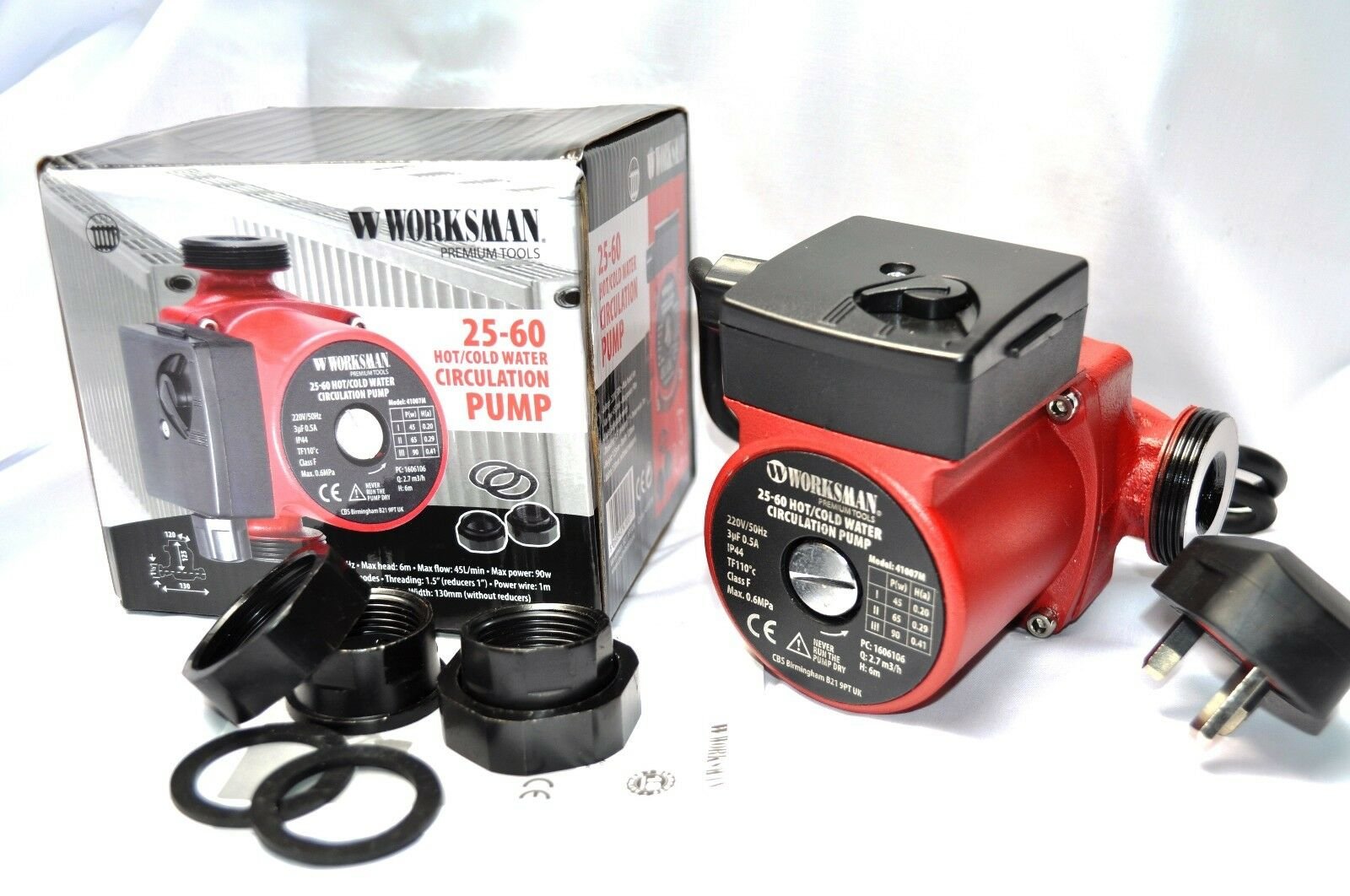
If your radiators are lukewarm, your hot water is slow to arrive, or your boiler is working harder than it should, the problem often isn't the boiler at all — it's the pump. Central heating and circulating pumps are the unsung workhorses of any heating system, quietly pushing hot water around your pipework 24/7 during the colder months. When one starts to fail, comfort and efficiency both suffer.
This guide covers what these pumps do, how to choose the right one, and which models we'd recommend depending on your system and budget.
What Does a Central Heating Pump Actually Do?
A central heating pump (also called a circulating pump or circulator) moves hot water from your boiler, through your pipework, into your radiators or underfloor heating, and back again. Without it, your boiler could heat water perfectly well, but that heat would never reach the rooms that need it.
Most modern pumps are wet rotor pumps, meaning the water itself lubricates and cools the pump — which is why they're generally low-maintenance and long-lasting when sized correctly.
Circulating Pump vs Central Heating Pump: Is There a Difference?
In everyday use, the terms are interchangeable. Technically, "circulating pump" is the broader term and covers pumps used for both central heating and secondary hot water circulation (the loop that gives you instant hot water at the tap without waiting for it to travel from the cylinder). Some pumps, like the BritTherm Bronze Edition 15-60/130 Secondary Hot Water Circulator Pump, are specifically built for that secondary hot water job rather than radiator circuits.
Signs Your Pump Needs Replacing
- Radiators that are cold at the top or take a long time to heat up
- A humming or buzzing noise from the pump housing, or one that's gone silent
- The pump running hot to the touch, or visible leaking around the seal
- Your heating engineer diagnosing a seized or airlocked pump during a service
If you're seeing any of these, it's usually more cost-effective to replace the pump outright than to keep nursing an old one along — modern A-rated pumps are also considerably cheaper to run.
How to Choose the Right Pump
1. Check compatibility first. Pump sizing (the port spacing and connection type) needs to match your existing pipework and valves so it's a straight swap. Pairing your new pump with the correct isolation valves — such as 28mm Perfect Pump Valves (pair) or 22mm Perfect Pump Valves (pair) — makes future servicing far easier, since you can isolate the pump without draining the whole system.
2. Match the flow rate and head height to your system size. A small flat and a large four-bedroom house with multiple heating zones have very different demands. Larger properties, or those with underfloor heating, typically need a higher head pump such as the BritTherm UPS2A 25-60/130 Domestic Circulator Pump.
3. Prioritise energy efficiency. A-rated pumps use significantly less electricity than older models and often include auto-adaptive speed control, which adjusts output automatically based on demand. The Embrass Peerless Eclipse Circulation Pump (A-Rated) is a strong example — energy-efficient, quiet, and currently reduced from £95.00 to £85.00.
4. Think about noise. For homes where the pump is near a bedroom or living space, a quiet wet-rotor design matters more than raw output.
Recommended Pumps by Use Case
Best all-round upgrade: The Grundfos UPS3 15-50/65 Pump is one of the most trusted names in circulation pumps, known for reliability and quiet running — a solid choice if you want a "fit and forget" solution.
Best value for money: The Worksman Contract Circulating Heating Pump offers a corrosion-resistant body and 3-speed control at a competitive price point, making it a favourite for straightforward domestic replacements.
Best for smaller systems: The Stuart Turner ST15/60-130 Heating Circulator is a compact, dependable option well suited to standard domestic heating circuits.
Budget-friendly standard replacement: The BritTherm Domestic Standard Circulating Pump 15-60/130 DS15 covers most like-for-like replacements and is currently on offer at £83.99.
Don't Forget the Fittings
A pump swap is also the ideal time to check the smaller components around it. If your existing gate-type valves are worn, seized, or leaking, replacing them alongside the pump saves you calling an engineer back out later — see our 28mm Pump Valve Gate Type and 22mm Pump Valve Gate Type options.
Installation: DIY or Call a Professional?
Isolating, draining, and swapping a heating pump is a job many confident DIYers can handle, provided the system is fully drained (or the pump valves closed) and electrical isolation is done safely. That said, if your system uses a combi boiler with an integrated pump, or you're unsure about wiring, it's worth bringing in a Gas Safe registered engineer — particularly for anything involving the boiler itself.
For a full system refresh, it's also worth checking your heating controls and wider heating & hot water range, so your new pump is working alongside thermostats and valves that are equally up to date.
A failing circulating pump rarely announces itself with a dramatic breakdown — it's usually a slow creep of cold radiators and rising energy bills. Replacing it with a correctly sized, A-rated model is one of the most cost-effective upgrades you can make to a central heating system.
Browse our full range of central heating and circulating pumps at Wise Guys DIY, with fast UK delivery and free shipping on orders over £499.
Recent Posts




Wise Guy - Where great deals meet quality shopping. Enjoy exclusive discounts and hassle-free shopping from the comfort of your home.
Overview
My Account
Contacts
-
Wise guys plumbing ltd T/A Sudbury building Bathrooms supplies 12 Watford Road Wembley HA0 3EP
-
Phone : 07849591902, 02089046958
-
Address
Wise guys plumbing ltd T/A Sudbury building Bathrooms supplies 12 Watford Road Wembley HA0 3EP
-
Phone
07849591902, 02089046958
-
Email

